Tuesday, 24 April 2012

Five habits people with lucky skin share


Are women with naturally beautiful skin just plain lucky? We spill the beans.

Five habits people with good skin share:


Habit #1:
 They never go to bed with makeup on

After a long, tiring night, it may be the last thing you’d want to do – wash your face. But by now we all know that leaving makeup on can be disastrous for your skin. It clogs your skin’s pores, trapping the oil, leading to dead cell accumulation and even breakouts. Worse, leaving eye makeup on can result in you waking up with itchy, red eyes. So no matter how tired you are, walk up to the sink and wash it off.
We suggest you pour some baby oil onto a cotton ball and remove eye-makeup and then just wash your face with a good face-wash. This is less cumbersome in comparison to using a cleansing lotion. Do this only on nights that you are very tired. Otherwise go the elaborate way, as it removes any trace of leftover makeup.

Habit #2: They wear sunscreen everyday
The sun’s harmful rays are known to be a major cause for skin damage; even causing early ageing. So this is definitely one thing you mustn’t skip before heading out during the day. Experts recommend using a sunscreen with SPF 30 at least in combination with a moisturiser. Even oily skin needs external moisture application. But choose one that isn’t too heavy.

Habit #3: They keep their hands off their faces
Many people can’t seem to keep their hands off their faces. This is one nasty habit. By doing this, you’re transferring all the bacteria from your dirty hands — that have touched all things under the sun — onto your face. And now we know why your skin has been breaking out.
Keep your hands strictly off your face. Don’t touch it unnecessarily, when you have to use clean hands.

Habit #4: They get their beauty sleep
When one doesn’t get adequate zzzz time, it shows on the skin. All those lucky women who have glowing, radiant skin never skimp on their sleep. Sleep time is when your skin repairs itself, if you take that away from it – your skin is likely to look haggard.
So get at least 8 hours of sleep a day. Unless you’re doing that you are missing out on the last burst of growth hormone that is released during the last stage of sleep. This growth hormone is known to play a key role in carrying blood to the skin’s surface, which oxygenates the skin and improves its overall appearance.

Habit #5: They don’t overdo it
This one is of utmost import. The best skincare regimes are those that are done in balance. By this we mean, not overdoing them in your hunt for perfect skin. Over cleansing, over moisturising and over medicating the skin upsets the balance. For example, you’re having breakouts, and so you try using a host of products that control oil secretion. When you do this, you end up over-drying your skin, and this puts the sebaceous glands in your skin on alert, and they begin to produce more oil, resulting in more breakouts.
So wash your face two times a day. Moisturise it and apply sunscreen in the morning. At night, make sure you remove all makeup and apply a night cream that suits you. Get facials once a month or perhaps every 15 days if you think your skin needs one. But don not over do any skincare regime.
Also read: 


Source: Yahoo!

The Superfood that Fires Up Your Metabolism

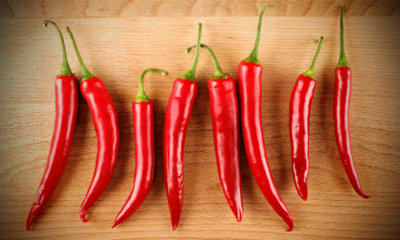
Today I listened to a podcast about hot new flavors and one of the top trends was spicy peppers, particularly interesting combinations like jalapeno mango or chili lime...yum! I was thrilled because hot peppers are one of the natural seasonings I feature in my newest book S.A.S.S! Yourself Slim. Rather than adding salt or sugar, I flavor each meal with five types of natural seasonings: hot peppers (jalapeƱos, chili pepper, crushed red pepper , cayenne, etc.); herbs and spices (basil, garlic, rosemary, cinnamon, vanilla, ginger, etc.); vinegar (balsamic, champagne, brown rice or infused options like fig, pear, or pomegranate); tea (green, black, white, and oolong); and citrus juice or zest. In some recipes I combine several seasonings, like stir-fry options that use brown rice vinegar, a splash of fresh squeezed citrus juice, garlic, fresh grated ginger, and crushed red pepper. I also like to use hot peppers as a garnish, like in this picnic snack, which includes sliced red jalapeno on top of whole-grain crackers spread with garlic-basil pesto. 

I had to build up my tolerance for peppers and spicy seasonings over the years, but I'm glad I did, because there are numerous benefits to including some heat in your diet. One study from Purdue University found that cayenne pepper helped curb appetite and increase calorie burning. Over six weeks, the researchers tracked 25 people, half of whom liked spicy food and half of whom did not. They consumed either no hot pepper , their preferred amount, or a standardized amount, which was about half a teaspoon. Both groups burned more calories when they consumed hot peppers, and those who were infrequent eaters of spicy food also felt less hungry after eating the spice and experienced fewer cravings for salty, fatty, and sweet foods. 

And, in addition to a boost in metabolism and appetite regulation, peppers offer other important health benefits: 

They help clear congestion 

Capsaicin , the substance that gives peppers their heat, is similar to a compound found in many decongestants. If you add a dash of cayenne pepper to a cup of hot tea it will help stimulate the mucus membranes that line your nasal passages to drain so you can breathe easier. 

They boost immunity 
Peppers are an excellent source of both vitamin C, which supports immunity, as well as vitamin A, which helps to form mucous membranes, barriers that keep germs out of your body. 

They're heart healthy 
Peppers have been shown to fight heart disease by lowering "bad" LDL cholesterol , increasing "good" HDL, and improving circulation. 

They reduce ulcer risk 

Many people think that hot peppers cause ulcers, but in fact the opposite is true. We now know that most ulcers are caused by bacteria, and hot peppers help to kill that bacteria. 


Source: Yahoo!

Sunday, 22 April 2012

The No-diet Plan: The Easiest Way to Lose Weight Without Feeling Deprived


By Sarah B. Weir, 

Monday, 16 April 2012

Mistakes That Up Your Risk of Food Poisoning

We take every precaution to avoid food poisoning: We use separate cutting boards for meat and vegetables, we scrub our fresh fruit, and we disinfect just about everything. But when we focus so intensely on the major causes of food poisoning--undercooked food, unclean surfaces--little mistakes can easily slip through the cracks. Yet it's these tiny blunders that can lead to a massive case of nausea, vomiting, diarrhea, and fever.

Are you unknowingly putting yourself at risk? U.S. News has gathered a list of common ways to give yourself food poisoning.
Not washing out your shopping bags

Reusable grocery bags may be good for the environment, but they're not always good for you. According to the Academy of Nutrition and Dietetics, only one in every six people washes out reusable shopping bags on a regular basis. This can turn your handy totes into a breeding ground for bacteria, with juices from raw meat mixing with ready-to-eat foods like bread and fruit, the academy says. To help keep your food safe in transit, be sure to regularly wash your reusable bags in the washing machine or with hot, soapy water. You should also take care to separate your groceries: Use one bag for meat, poultry, and fish, and another bag for vegetables. When you've finished unloading your bags, store them in a clean, dry location (the trunk of your car doesn't count).

Keeping groceries in the car

The key to food safety is keeping food at the correct temperature. This can be a bit tricky when you're transporting your groceries from the store to your fridge--especially if you leave them in the car while you run other errands. If you can't head straight home from the store, bring along insulated bags for meat and dairy products to prevent spoiling.

Ignoring the temperature of your fridge

Tucked away in the refrigerator, chicken should keep for one to two days, red meat for three to five days, eggs for three to five weeks, and butter for one to three months. But only if your fridge is running at the proper temperature. The Academy of Nutrition and Dietetics insists that you keep your fridge at or below 40 degrees Fahrenheit and your freezer below zero degrees Fahrenheit. Other fridge-safety tips include keeping a thermometer on the middle shelf, and storing food in their original containers (those built-in egg holders don't keep eggs cool enough) labeled with an eat-by date.

Cleaning with a sponge

The point of wiping down your countertops is to eliminate bacteria, not spread germs around. That said, the last thing you want to use is a damp sponge or kitchen rag. Unless the sponge is fresh out of the wrapper, you're most likely making the situation worse. You're better off using paper towels and a kitchen-safe cleaning solution. However, if you're not one to overuse paper products, sanitize your sponges by washing them in the dishwasher or by moistening them and microwaving them for 30 seconds.

Casually rinsing

We've all done it: Gulped down a glass of water, swirled some hot water around in the cup, and placed it in the dish drainer. Or used our kitchen scissors for a quick snip of a meat package, dipped them under running water, and called it a day. But anything coming in contact with your mouth or with raw meat carries bacteria and needs to be washed in hot, soapy water.

Overusing antacids

Strange as it may be, people who regularly use antacids to control heart burn and acid reflux put themselves at a higher risk for contracting food poisoning. According to the Mayo Clinic, our bodies have a variety of natural defenses against food-borne illnesses, and stomach acid does a very good job of eliminating ingested bugs like salmonella. Antacids lower your stomach's acidity, allowing these bugs to make their way into your intestines. To help protect yourself, only use antacids when necessary, not as a preventative measure.

Letting critters on your countertops

Fido and Fluffy can't stand the heat, and your stomach can't stand the germs they bring to your countertops. Each step they take on your cooking and eating surfaces leaves behind traces of dander and feces, which raises your risk for illness. Animals can also carry Campylobacter enteritis, a bacterium that the Centers for Disease Control and Prevention cites as one of the leading causes of diarrheal illnesses in the United States. To avoid Campylobacter, keep your counter and table off-limits to your furry friends, and wash your hands thoroughly after spending time with your pets.


Source: Yahoo!